


Thrift & second-hand · KamraiDee
See what each toy earns when it sells.
Small finds add up. Log each toy, sealed or opened, with what you paid, and see which ones earn after the fee, shipping and packing.
Joining costs nothing. There is no waitlist.
Eight second-hand lines in one app
What do you sell?








Sell more than one line? Each piece sits on its own line, so one stall can carry several.
Why it helps
Know what each piece cost you and what it earns.
Log any kind of purchase.
You can buy by the kilo, by the bale, or one piece at a time.
Each piece gets its share.
Every sale from a kilo or a bale takes an equal share of what's left of the pile's cost.
Profit on each piece you sell.
This is the sold price minus what you paid, any repair or cleaning, and the fees on the sale.
Where it sold best.
See your profit by channel or venue: online, market, shop or a named event, picked when you log the sale.
What you track
Four things you track
Pieces
What you paid, plus any repair, cleaning or inbound shipping as extra cost.
Lots
A kilo or a bale, what you paid and how many pieces it gave.
Sales
The sold price, plus the platform fee, ship-out and packing you type.
Your shop page
Customers pay you directly with your PromptPay QR.
Example: a lot of 20 jackets (made-up numbers)
Twenty jackets from one lot can earn very different amounts

You pay ฿2,000 for a lot of 20 jackets and count them. Each one gets an equal share of the cost: ฿100. A denim jacket sells online for ฿1,200, so the profit on that piece is ฿1,100. An everyday jacket sells at the market for ฿250, so it earns ฿150. Now you know which kind to look for next time.
Doubling your money isn't a 100% margin
Price from margin, not markup
Margin is the share of the sold price you keep after the true cost. With made-up numbers, a piece bought for ฿100 and sold for ฿200 is a 100% markup but a 50% margin. Fees and packing come off first.
Free tools
Free calculators for thrift sellers, no signup
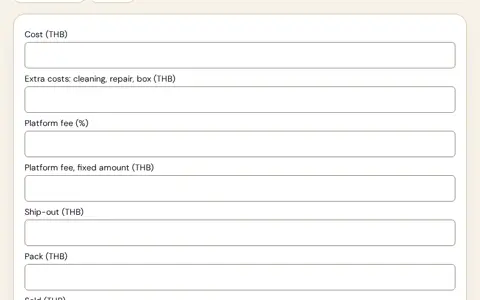 Profit per pieceWhat each piece earns when it sells, after what you paid, repairs, fees, shipping and packing.
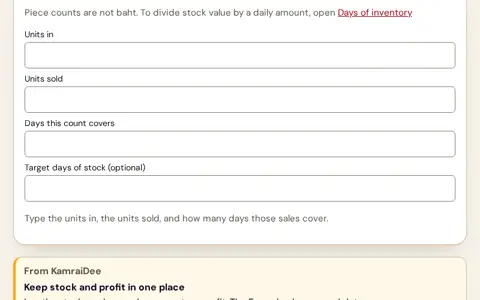 How much has soldPieces sold compared with pieces bought in, and how many days the rest will last.
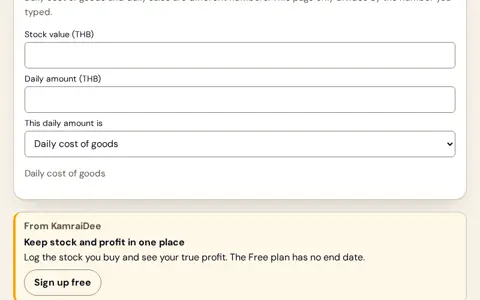 Days of stockYour stock value divided by what you sell in a day.
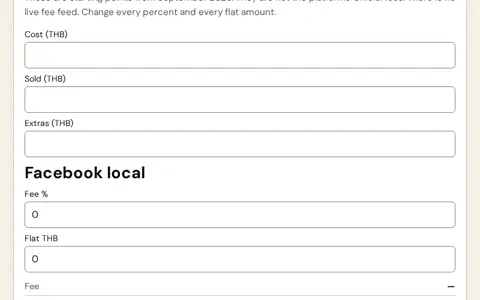 Selling fees by channelOne piece, with fees you can change for each place you sell.
They need no sign-up and save nothing.
From the blog
Related reading
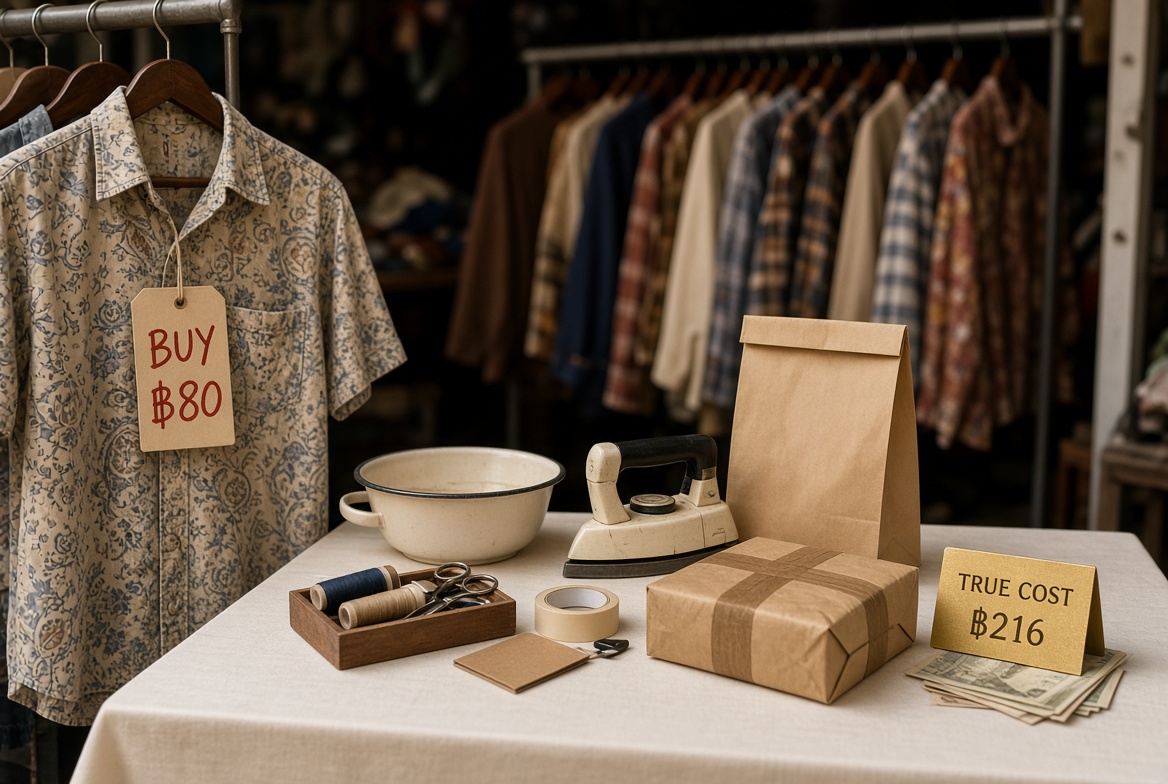 Buy price is not true costYou found it first. You talked the lot down. The hangtag says ฿80 and your brain files that as “cheap.”
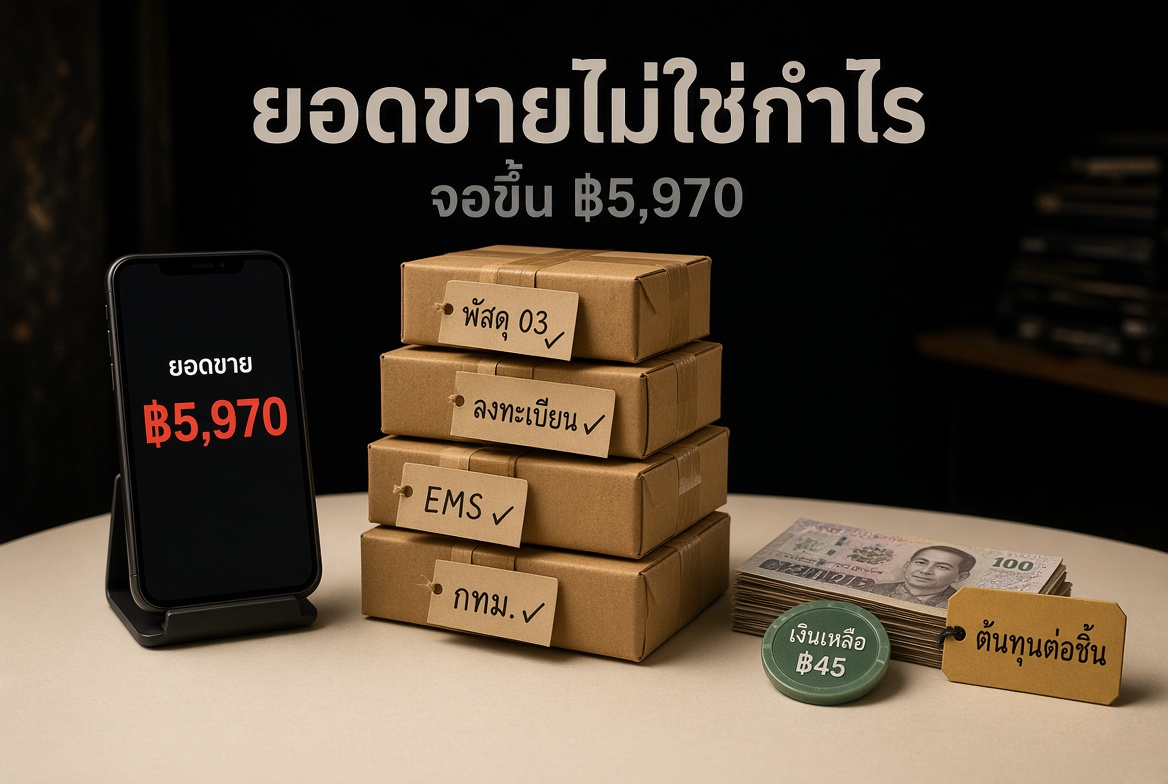 Sales is not profitA high sales total is not money kept. See a ฿199 x 30 example, then count true cost on one listing today.
 Is your busy shop truly profitable?Understanding the true nature of sales vs profitability
Log each piece. See what it earns.
Free to join. Same price for every shop type. See pricing
Joining costs nothing. There is no waitlist.
FAQ
Second-hand profit questions, answered plainly
How do I price second-hand toys?
Check what the same toy actually sold for. Then compare it with what this one cost you: what you paid, plus any cleaning, plus the platform fee, shipping and packing on the sale. The gap is the profit on that piece.
I buy toys by the box from a warehouse. How is each one costed?
Type what you paid for the box or lot and how many pieces it gave. Each sale then takes an equal share of what's left of the cost.
Can I note whether a figure is sealed, and which series it's from?
Yes. Toy pieces have a series line, a figure name, a seal note (sealed, opened or resealed), a battery note and a completeness note, all as your own notes. KamraiDee doesn't check authenticity or test batteries.
What about toys that turn out broken?
Log them as waste: damaged, unsellable or donated. Their cost shows as a loss in baht, kept as its own total.